
There is something strangely familiar about the Philippines to a Sri Lankan reader. Different languages, different colonial rulers, different histories — and yet the echoes are hard to miss. Both countries were shaped by empires that left behind their law, their schools, their bureaucracy, their hierarchies of class and language. Both became independent nations still carrying pieces of those empires inside them. And in both places, independence did not end the argument. It started a harder one:
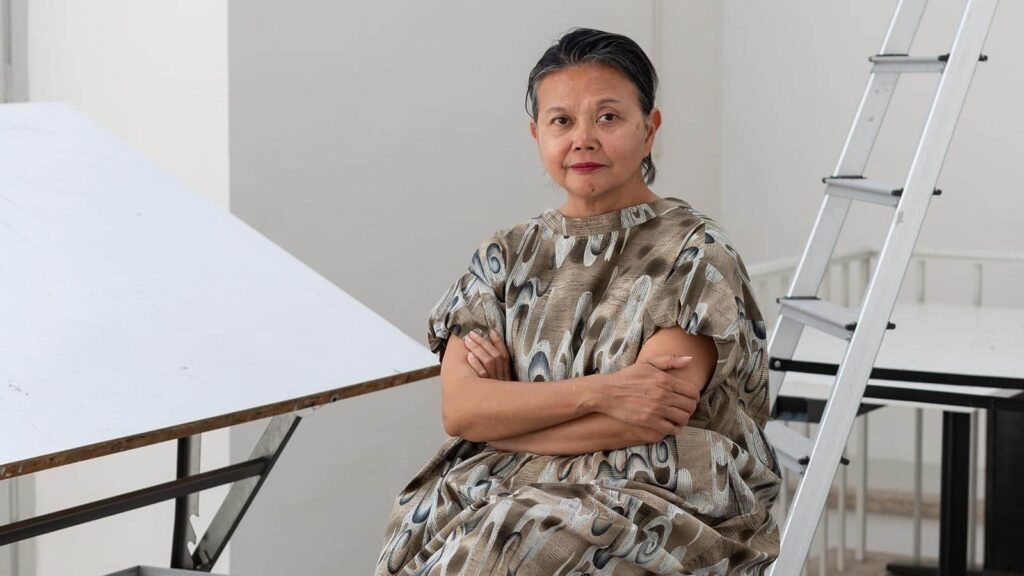
That is exactly the territory occupied by Filipino novelist **Gina Apostol**. She is not interested in historical novels where the past sits safely behind glass. She breaks it open — asking who wrote it, whose evidence survived, whose language was considered respectable, whose violence was forgotten, and whose version eventually became “the truth.”
For more than three centuries the Philippines was under Spanish rule. At the end of the nineteenth century, Filipino revolutionaries finally fought Spain for independence — and won it, only to have it taken from them again. Following the Spanish-American War, Spain simply transferred control of the islands to the United States in 1898. Filipinos who believed they were about to become a free nation found themselves confronting a second empire instead. The result was the Philippine-American War, beginning in 1899.
That history sits at the centre of Apostol’s novel *Insurrecto*, though she refuses to tell it like a textbook. She tells it as a disagreement.
In the novel, two women travel through the Philippines while developing competing film scripts about **Balangiga**, a town on the island of Samar that saw one of the war’s most brutal episodes. One woman is American. The other is Filipino. And they cannot agree on what happened. One sees soldiers; the other sees occupiers. One describes an uprising; the other, resistance. One calls a man an insurgent; the other calls him a freedom fighter. Publishers Weekly noted that the novel examines how societies decide which version of events gets remembered, confronting a history of American imperialism that has gone largely unexamined in the American telling of itself.
That is where *Insurrecto* becomes larger than the Philippines. Because every former colony inherits not just roads, courts, and schools from empire — it inherits empire’s vocabulary too. And vocabulary, once inherited, does not stay neutral.
Sri Lanka passed through Portuguese, Dutch, and British rule before independence in 1948. The British left; English stayed. The administrative state stayed. So did the legal institutions, the educational hierarchies, the inherited ideas about who counted as respectable and who held authority. Political independence arrived on a fixed date. Cultural and psychological independence did not arrive on any date at all — it is still being negotiated, generation by generation.
This is the gap Apostol’s fiction keeps circling: the distance between the day the coloniser’s flag comes down and the much longer, much less certain process of a society deciding, for itself, what its own history means.
Language is where she locates this most precisely. Growing up multilingual in the Philippines, Apostol has described translation under colonial rule as something far larger than moving words between languages — it becomes bound up with power, hierarchy, and how a person is permitted to understand themselves. Picture three Sri Lankans at the same table: one thinks most easily in Sinhala, another in Tamil, a third was educated almost entirely in English. They may share a passport, but they do not share an equal relationship to the state, to employment, to whose version of history gets taught in school. The Philippines carries its own version of this — Tagalog, Waray, Cebuano, layers of Spanish and English — and Apostol doesn’t smooth the differences away. She builds her fiction out of the friction between them.
Her later novel *La Tercera* extends this across generations, following a Filipino family through memories of American occupation, revolution, dictatorship, migration, and the 1986 People Power Revolution. Publishers Weekly calls it a multigenerational epic in which colonial history and the later struggle for democracy overlap rather than succeed one another — because that is how it actually works. Colonial history does not end and postcolonial history begin on the next page. One bleeds into the other, often inside the same family, sometimes inside the same sentence.
Here is the question that matters most for South Asian readers of Apostol: what happens when power passes from a foreign elite to a domestic one? Does power itself change, or only the person sitting in the chair?
The Philippines answers this with its own hard history — independence followed by the authoritarian rule of Ferdinand Marcos, entrenched political dynasties, and repeated struggles to reclaim democratic power from families that had simply replaced the colonial administration with their own. Sri Lanka’s path has been different in its particulars, but the underlying questions recur on schedule: who controls the national story, whose suffering makes it into the schoolbook, who is remembered as a patriot and who as a traitor. Independence, Apostol’s work insists, does not settle the argument over who owns history. It just changes who’s allowed to enter the room where the argument happens.
Apostol’s sharpest instinct is her refusal to leave history to historians. It lives in a grandmother’s version of events that contradicts her brother’s. In a photograph nobody in the family will explain. In a language a child was quietly discouraged from speaking at home. In *La Tercera*, family memory opens directly onto national memory, and the novel asks what happens to a family — or a country — that never confronts the truth sitting inside its own house.
Sri Lankan families will recognise this immediately. The history of 1958, of 1971, of 1983, of the southern insurrections and the long civil war, does not live only in commission reports and archives. It lives at dinner tables, told two or three conflicting ways depending on who is speaking — and sometimes it lives in what nobody at that table has ever said out loud. Apostol understands that the silence itself is evidence. A grandfather who will not discuss 1971, a family that changed which language it spoke at home after 1983 — these absences carry as much historical weight as anything written down, precisely because no official archive will ever record them.
Not because the Philippines and Sri Lanka are the same — they plainly are not. But because both societies inherited institutions they didn’t choose, both are still negotiating language and identity as live political questions, and both have watched nationalism function as liberation in one decade and as a new tool of exclusion in the next. Both carry large diasporas holding onto versions of home that no longer quite exist. Both keep arguing about the past because the past has never finished with the present.
Apostol’s real contribution is a shift in the question itself — from *what happened* to **who is telling us what happened**. The second question, it turns out, is the one that decides the answer to the first.
*Insurrecto* was named among Publishers Weekly’s best fiction of 2018, and Apostol has drawn increasing international attention for turning Philippine history into something larger than a national story. But her most unsettling move may be the simplest one: she does not ask the former colony to explain itself politely to the centre that once ruled it. Her fiction can be multilingual, fragmented, difficult — and that difficulty is itself the argument. Why should a Filipino story simplify itself for an English-speaking reader? Why should the former colony always do the work of translation?
That question travels easily to Sri Lanka. Why must Sinhala or Tamil experience be translated into categories invented elsewhere before the world will take it seriously?
Perhaps that is the deeper meaning of postcolonial literature at its best. It isn’t only literature *about* colonialism. It’s literature in which the former colony claims the authority to describe the world in its own terms — on its own difficulty, at its own pace, answerable to no one else’s fluency.
That is why Gina Apostol matters. She is not telling the Philippines’ story to the world. She is asking something far less comfortable:
**When an empire disappears, who inherits the right to tell the story?**
For Sri Lankan readers, that question should sound very familiar.