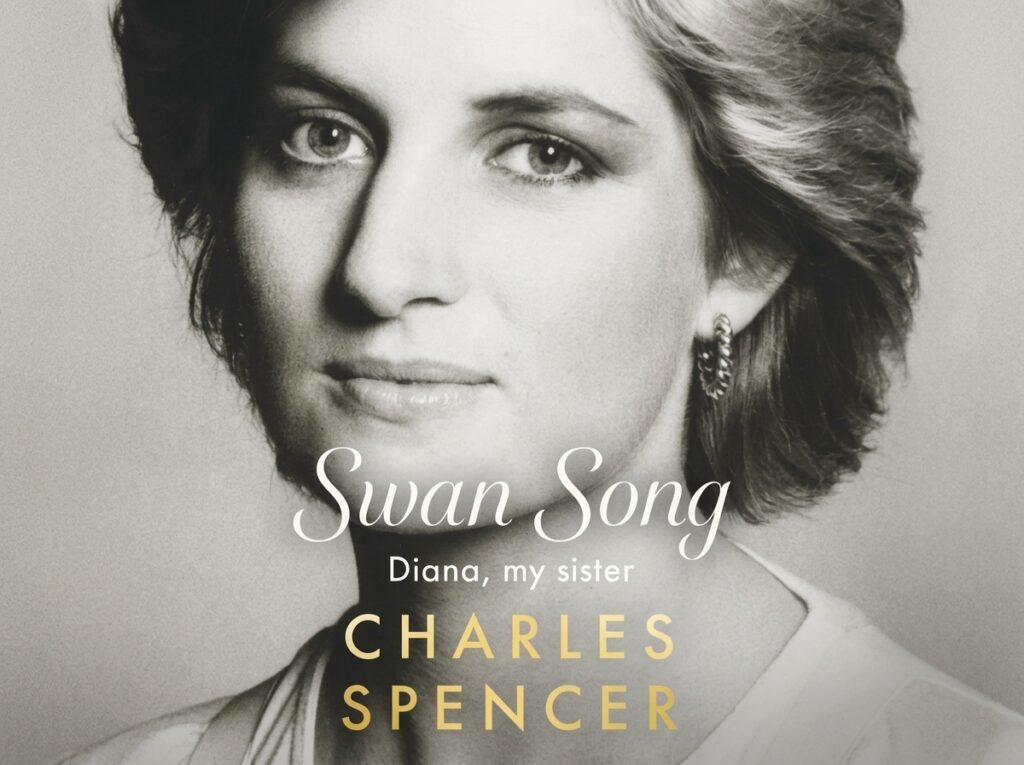
Some lives refuse to become history.
Nearly thirty years after Princess Diana died in Paris, her photographs remain instantly recognisable. Her story still produces documentaries, arguments, memories — and an extraordinary sense of unfinished conversation.
Now that conversation has become intensely personal.
In Swan Song: Diana, My Sister, Charles Spencer does not approach Diana simply as the Princess of Wales, a royal icon or one of the most photographed women of the twentieth century.
He approaches her as his sister.
And perhaps that is why the book has attracted so much attention.
What Do You Remember When the World Remembers Someone Differently?
For millions of people, Diana belonged to the public.
For Charles Spencer, she was the girl he grew up with.
The book takes readers back before the palace, before the photographers and before the marriage that would turn her into a global figure. Spencer recalls her childhood and youth, her relationship with Prince Charles and the extraordinary transformation of a young woman into someone watched by almost the entire world.
Penguin describes the book as the first time Spencer has spoken openly and at length about his sister and the traumatic week surrounding her death.
But the story inevitably leads to that August night in 1997.
Where were you when you first heard that Diana had died?
For many people old enough to remember, the answer comes immediately.
A Brother’s Regret
Perhaps the most moving aspect of Spencer’s recent reflections is regret.
He has said that he sometimes wonders whether he could have done more to help his sister while she was living under enormous public scrutiny.
There is something painfully human about that question.
Could I have done more?
It is a question many people ask only after somebody they love is gone.
The book also returns to one of the most unforgettable images of Diana’s funeral: the young Princes William and Harry walking behind their mother’s coffin.
Spencer says he opposed the decision and recounts disagreements over the funeral arrangements. Those recollections have also reopened disputes over precisely what happened, with Buckingham Palace challenging aspects of Spencer’s account.
That makes Swan Song something more complicated than a simple tribute.
It is memory.
Grief.
Family disagreement.
And one man’s attempt, almost three decades later, to put his version of an extraordinary story on record.
Why Are We Still Reading About Diana?
Perhaps because beneath the palaces, titles and headlines was a story everyone understands.
A young woman falls in love.
A marriage goes wrong.
Children are caught between adults.
A family struggles privately while the world watches publicly.
Then somebody dies far too young.
Royalty made Diana famous.
But perhaps it is those very ordinary human experiences that have kept people interested in her.
Charles Spencer’s book asks us to look once more at the woman behind the photographs — not because the world has forgotten Diana, but because it has never quite stopped trying to understand her.
For Readers in Sri Lanka
For Sri Lankan readers who would like to read Swan Song: Diana, My Sister, Lanka Books Online can source the book specially from overseas.
The service is available at the book’s sourcing cost plus a 30% sourcing fee and postage, with the book supplied within approximately 14 days.
Sometimes the book you want does not have to be sitting on a local bookshelf.
If it exists somewhere in the world, we can help bring it closer.
Lanka Books Online
www.lankabooksonline.com