
A delayed train. A newspaper clipping. A grandmother’s voice. A strange desire to poison a monk. Every great novel begins somewhere.
Why does something ordinary ignite one person’s imagination while the rest of us simply move on?
Some of the world’s greatest writers have told us where it started. The answers are stranger than you’d expect.
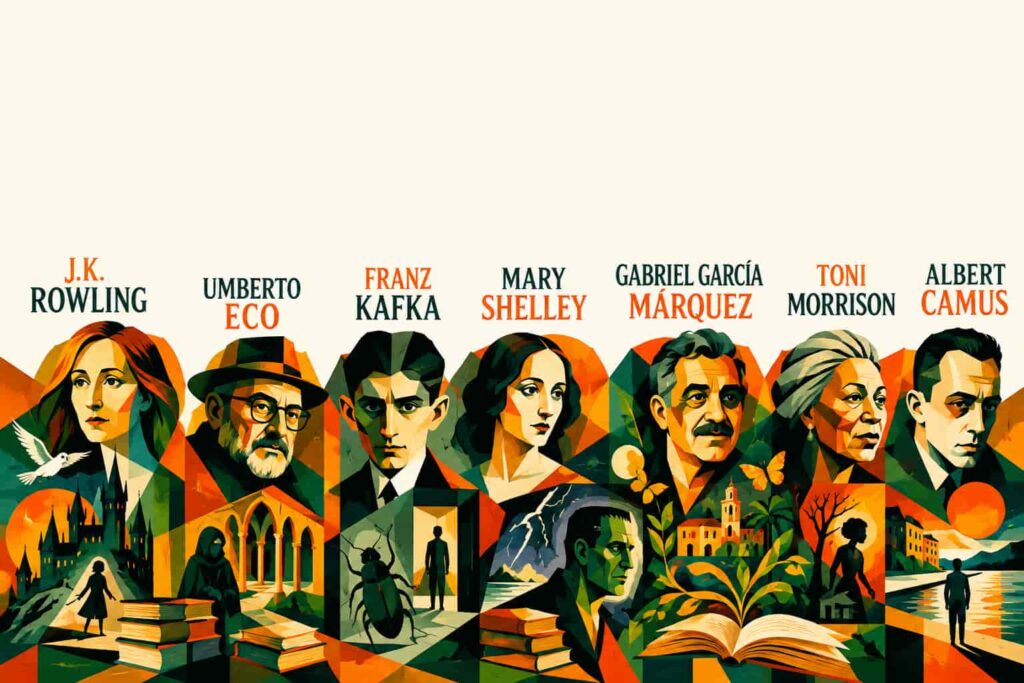
J.K. Rowling: A Boy on a Train
In 1990, Rowling was on a delayed train from Manchester to London when the idea of a boy who discovers he is a wizard arrived fully formed. She had no working pen, so she sat and let the idea grow in her head.
That boy became Harry Potter. Seven books followed. Imagination, it turns out, doesn’t wait for stationery.
Umberto Eco: I Wanted to Poison a Monk
Asked what inspired The Name of the Rose, Eco gave a famously simple answer: he felt like poisoning a monk.
Not literally. It was the seed of a fictional possibility, and from it grew a medieval world of monasteries, forbidden books, heresy and murder. A passing thought became a universe.
Mary Shelley: A Waking Nightmare
Summer 1816, a rainy villa near Lake Geneva. A group of young writers challenge each other to invent ghost stories. Shelley struggles for days.
Then, half-asleep, she sees a scientist kneeling beside the creature he has brought to life. Frankenstein grew from that image, and from a question we’re still asking: just because we can create something, should we?
Gabriel García Márquez: His Grandmother’s Voice
As a boy, García Márquez listened to his grandmother tell extraordinary stories in a perfectly ordinary tone. Ghosts, omens and impossible events were reported like the weather.
Years later, that deadpan voice unlocked One Hundred Years of Solitude. His breakthrough wasn’t what to write but how: say the unbelievable as if it were plain fact.
Toni Morrison: A Clipping She Couldn’t Forget
While compiling The Black Book in the early 1970s, Morrison came across the story of Margaret Garner, an enslaved woman who killed her child rather than see her returned to slavery.
It stayed with her for years, and it became a seed of Beloved, a novel about memory, motherhood and the ghosts of history. Sometimes the writer doesn’t find the story. The story won’t leave the writer alone.
Kazuo Ishiguro: A Song for the Last Scene
While writing The Remains of the Day, Ishiguro has said he was listening to Tom Waits’s “Ruby’s Arms,” a song of leave-taking sung with aching restraint. It helped him find the emotional pitch for the novel’s ending, when Stevens finally lets a little feeling through.
Pages of planning couldn’t do what one song did.
[Optional: a Sri Lankan or South Asian author]
[Add one verified origin story here, with a source you can cite. A local voice would make this list distinctly ours.]
So Where Does the Spark Come From?
A train for Rowling. An absurd impulse for Eco. A vision for Shelley. A grandmother for García Márquez. A newspaper clipping for Morrison. A song for Ishiguro.
But the spark is not the novel.
Thousands of people ride trains. Millions have strange dreams. We all overhear conversations and remember things from childhood. Most of it disappears. A writer holds on to one moment and asks:
What if?
Somewhere between those two words, a story begins.
Read the stories behind the stories: [link to curated collection at lankabooksonline.com]
Your turn: Have you ever had a moment, met someone or overheard a conversation and thought, “There’s a novel in this”? Tell us at [email / Instagram handle], and we’ll share the best ones. And if you know where your favourite Sri Lankan story began, we’d love to hear that too.
Lanka Books Online
Discover the stories behind the stories.
An idea on a train. A nightmare. A childhood memory. A strange desire to poison a monk. Every great story begins somewhere.
Where do writers find their stories?
Perhaps the better question is: Why does something ordinary ignite one person’s imagination while the rest of us simply move on?
The answers from some of the world’s greatest authors are as surprising as their novels.
J.K. Rowling: A Boy on a Train
In 1990, J.K. Rowling was travelling on a delayed train from Manchester to London when the idea of a young boy attending a school of magic suddenly appeared in her imagination.
She had no working pen. So she sat there, developing the idea in her head.
That boy became Harry Potter. The school became Hogwarts. Seven books and a worldwide literary phenomenon followed.
Sometimes imagination arrives without an invitation.
Umberto Eco: I Want to Poison a Monk
What inspired The Name of the Rose, that intricate medieval mystery?
Umberto Eco offered an astonishingly simple explanation. One day, he felt the urge to poison a monk.
Not literally, of course. It was the beginning of a fictional possibility.
From that strange impulse grew a world of monasteries, forbidden books, religious conflict and murder.
A passing thought became an entire medieval universe.
Franz Kafka: What If I Woke Up as a Monster?
Imagine waking one morning to discover you have become a gigantic, monstrous creature.
That is how Kafka’s The Metamorphosis begins.
But the real genius lies in what happens next. Gregor Samsa worries about missing work. His family worries about what to do with him.
The impossible becomes disturbingly ordinary.
Kafka left no definitive account of a single moment that inspired the story. Yet he transformed anxieties about work, family and human worth into one of literature’s most unforgettable openings.
Mary Shelley: A Nightmare That Would Not Die
A rainy summer near Lake Geneva. A group of young writers challenging one another to invent ghost stories.
Mary Shelley struggled for an idea.
Then came a waking vision: a scientist watching the terrifying creature he had brought to life.
Frankenstein was born.
What began as a frightening image became a question humanity is still asking: Just because we can create something, does that mean we should?
Gabriel García Márquez: The Voice of His Grandmother
As a child, García Márquez listened to his grandmother tell extraordinary stories in a perfectly ordinary voice.
Ghosts, superstitions and impossible events were discussed as though they were everyday occurrences.
Years later, that storytelling manner helped him find the voice of One Hundred Years of Solitude.
His great discovery was not simply what to write, but how to make the unbelievable believable.
Toni Morrison: A Story Hidden in an Old Newspaper
While researching African American history, Toni Morrison encountered the account of Margaret Garner, an enslaved mother who killed her child rather than see her returned to slavery.
The incident stayed with her.
Years later, it became one of the inspirations for Beloved, a novel about memory, freedom, motherhood and the ghosts of history.
Sometimes the writer does not discover a story. The story refuses to leave the writer alone.
Albert Camus: A Question Without an Answer
Not every novel begins with a dramatic incident.
For Albert Camus, fiction was a way to confront the absurdity of human existence.
What happens when someone refuses to display the feelings society expects?
In The Stranger, Camus turned that unsettling question into the story of Meursault, a man judged not only for what he does but also for what he fails to feel.
Here, philosophy became fiction.
Kazuo Ishiguro: When a Song Opens a Door
While working on The Remains of the Day, Kazuo Ishiguro found inspiration in an unexpected place: music.
Listening to Tom Waits sing Ruby’s Arms helped him understand the emotional restraint of Stevens, his English butler.
A man who cannot easily express what he feels became the heart of an extraordinary novel.
Sometimes a song can show a novelist what pages of careful planning cannot.
So Where Does the Spark Come From?
A train journey for Rowling. An absurd impulse for Eco. A disturbing vision for Shelley. A grandmother’s voice for García Márquez. A forgotten newspaper story for Morrison.
Different beginnings. One extraordinary result.
But there is something worth remembering.
The spark is not the novel.
It takes imagination to recognise an idea, courage to follow it and discipline to turn it into a book.
Thousands of people travel on trains. Millions have strange dreams. We all overhear conversations, remember childhood experiences and encounter curious people.
Most of these moments disappear.
A writer holds on to one and asks:
What if?
And somewhere between those two words, a story begins.
Lanka Books Online
Discover the stories behind the stories.
A question for our readers: Have you ever experienced a moment, met someone or heard a conversation that made you think, “There is a novel in this”? We’d love to hear your story.