
There is a strange thing that happens when we grow up. We stop reading the books that told us everything we needed to know. We trade them for reports, news feeds, self-help guides, and productivity hacks. We convince ourselves that bigger words mean deeper wisdom. And somewhere in that trade, we lose something quietly, without even noticing it is gone.
These ten books were written for children. But do not let that fool you. Strip away the talking animals, the magical wardrobes, and the friendly spiders — and what you find underneath are some of the most honest reflections on love, loss, identity, courage, and what it truly means to be human. They are small in size but enormous in weight. They do not waste your time with complicated language. They go straight to the heart, which is exactly what most adult books are afraid to do.
This is not a nostalgia list. This is a reading list for anyone who has ever felt lost, disconnected, or uncertain about life — which, if we are being honest, is all of us, at some point or another.
There is a single line in this book that stops people cold every time they read it: *”It is only with the heart that one can see rightly; what is essential is invisible to the eye.”* Antoine de Saint-Exupéry wrote this story in 1943, in the middle of a world at war, and yet it reads like a quiet letter written directly to you.
On the surface, it is the story of a pilot stranded in the Sahara Desert who meets a small boy from another planet. But what it is really about is how adults lose their ability to wonder. The prince travels from planet to planet, meeting grown-ups who are obsessed with power, vanity, money, and busyness. None of them are happy. None of them are free. And the pilot slowly begins to remember what the boy still knows — that a single rose, tended with love, is worth more than all the kingdoms in the world.
Adults who read this book often find themselves unexpectedly moved. Not because it is sad, though parts of it are. But because it holds up a mirror and asks a simple question: when did you stop seeing the things that actually matter?
Wikipedia — The Little Prince.
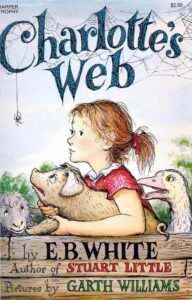
E.B. White wrote Charlotte’s Web in 1952, and it remains one of the most quietly devastating books ever written. It is the story of a pig named Wilbur and a spider named Charlotte, who weaves words into her web to save his life. That alone sounds like a children’s story. What happens at the end is something else entirely.
This book does not hide from death. It looks at it directly, tenderly, and with remarkable grace. Charlotte dies. She dies the way most living things die — not dramatically, but quietly, after a life of purpose. And in her death, White captures something that most adult novels spend hundreds of pages trying to say: that an ordinary life, lived with care and love, is a beautiful thing.
If you have ever dismissed someone’s life as insignificant, or if you have ever doubted whether your own small acts of kindness make any difference — read this book again. It will remind you that the most important things we do are usually the quietest.
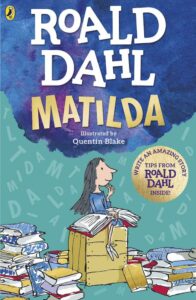
Roald Dahl wrote villains better than almost anyone. The Trunchbull in Matilda is not just a mean headmistress — she is the embodiment of every authority figure who ever made you feel small for being too curious, too bright, or too different. And Matilda is every person who ever sat quietly in a corner, absorbing everything, waiting for the world to catch up.
What makes this story remarkable for adult readers is its honesty about a truth many of us were never taught: intelligence is not always welcomed. Curiosity is not always rewarded. Sometimes the world will try to suppress what makes you brilliant, and the only way through is persistence, self-belief, and finding the people who actually see you.
Miss Honey is as important as Matilda in this story. She is a reminder that one kind adult, one teacher, one mentor who sees a child clearly, can change the entire trajectory of a life. Adults reading this book often find themselves thinking less about Matilda and more about the Miss Honeys in their own past — and wondering if they have been one to someone else.
In just under 400 words and a series of magnificent illustrations, Maurice Sendak captured something that philosophers and therapists have spent careers trying to articulate: that anger is not the enemy, that imagination is not escapism, and that after every storm, we need to come home.
Max is sent to his room without supper. He is furious. And in his fury, a forest grows. He sails to where the wild things are, becomes their king, commands the wild rumpus — and then, in the middle of his power and freedom, feels lonely. He wants to be where someone loves him best of all. He goes home. His supper is waiting, and it is still warm.
Adults carrying old anger, adults who feel torn between freedom and belonging, adults who have ever roared and gnashed their teeth at the unfairness of life — this book is for them. It does not judge Max. It does not judge his wildness. It simply shows him finding his way back, and somehow that is enough.
Few books have sparked as much debate as this one. Some people read The Giving Tree as a beautiful story of selfless love. Others read it as a troubling portrait of a one-sided relationship. Both readings are valid, and that tension is precisely what makes it so worth revisiting as an adult.
The tree gives everything — her apples, her branches, her trunk — and is described as happy. The boy takes and takes and returns only when he needs more, until finally he comes back as an old man with nothing left to want. And the tree, now just a stump, still offers what little she has.
What does this story mean? Is it about the love of a parent for a child? Is it a warning about people who take without giving back? Is it about the quiet dignity of those who love without expectation? Silverstein never tells us. That is the point. The book holds up a question and asks you to sit with it — to look honestly at the relationships in your own life and ask: who is giving, who is taking, and what does real love actually look like?
Lewis Carroll published this book in 1865, and nothing about it has aged. Alice falls down a rabbit hole and enters a world where the rules make no sense, where authority figures are absurd, where identity keeps shifting, and where asking reasonable questions leads to more confusion, not less.
Sound familiar?
Carroll was writing satire as much as fantasy. The Queen of Hearts who shouts “Off with their heads!” at every minor inconvenience, the Mad Hatter’s circular logic, the Caterpillar’s contemptuous questioning — these are not just whimsical inventions. They are portraits of power, conformity, and the strange social contracts adults accept without examining.
Alice is the most rational person in Wonderland, and nobody listens to her because she is a child. Adults who reread this book often feel the uncomfortable recognition that they live in their own version of Wonderland — a world full of nonsensical rules that everyone follows anyway, because questioning them is simply not done.
Wikipedia — Lewis Carroll
“What is REAL?” asks the Velveteen Rabbit. The Skin Horse answers: “It’s a thing that happens to you. When a child loves you for a long, long time, not just to play with, but REALLY loves you, then you become Real.”
Margery Williams published this book in 1922, and that exchange has been comforting people ever since. The rabbit wants to be real. Not in the mechanical sense, but in the deeper sense — to be truly seen, truly known, truly loved. He worries that he is not enough. He watches the more modern, flashier toys and wonders if he matters.
Every adult who has ever felt inadequate, overlooked, or unsure of their own worth should read this book. The message is not complicated: love makes things real. The relationships that have seen us at our worst and loved us anyway — those are the ones that make us who we are. You do not become real by being perfect. You become real by being loved through your imperfections.

Harry Potter is told from the beginning that he is nobody. He lives in a cupboard under the stairs. He is overlooked, underfed, and made to feel like a burden. Then one day he learns that the world has been wrong about him — and more importantly, that he has the power to decide who he will be.
What Rowling gave the world with this book was not just a magical adventure. She gave readers — young and old — a story about the profound difference between the identity we are handed and the identity we choose. Harry could have become bitter. He had every reason to. Instead, he chose loyalty, humility, and courage.
The line that echoes through every book in the series makes its first quiet appearance here: it is our choices that show what we truly are, far more than our abilities. Adults returning to this book often find themselves measuring their own lives against that principle. Not their talents, not their luck, not their circumstances — their choices. And that is both uncomfortable and deeply hopeful.
C.S. Lewis believed that childhood was not a lesser state of being, but a different and in some ways clearer one. Children, he argued, had not yet learned to be too sophisticated to feel things deeply. They had not yet built up the armour of irony and cynicism that adults use to protect themselves from being moved.
This book asks you to take down that armour for a few hours. It asks you to step through the wardrobe into a world where winter has lasted a hundred years, where an ancient sacrifice has the power to end evil, and where even the greatest betrayal can be met with forgiveness. Edmund betrays his siblings for Turkish Delight. Aslan dies in his place. Edmund is redeemed.
Adult readers return to this book and find different things at different stages of life. Some find a story about forgiveness. Some find a meditation on sacrifice. Some find a reminder that evil does not always look obviously evil — it often comes bearing gifts, asking only for a small betrayal. It is a book that rewards every rereading with a slightly different wisdom.
Dr. Seuss published this book in 1990, just a year before his death, and it feels like a final gift — a gentle, honest, and ultimately hopeful letter to anyone standing at the start of something unknown.
Unlike most graduation speeches, this book does not pretend that life is a straight road. It says clearly: you will get into slumps. You will find yourself in places called The Waiting Place, where nothing happens and nothing moves. You will face fears you cannot name. You will be lonely. And then — and this is the quiet miracle of the book — it says that you are too smart and too brave to stay stuck, and that life is waiting.
Adults reading this during a hard season of life often find it more comforting than any self-help book on the market. It does not offer strategies. It does not promise success. It simply says: the world is yours to navigate, it will not always be easy, and you have what it takes. There is something in those simple rhymes that reaches the part of us that still needs to hear it.
We live in a world that rewards complexity. We respect things that are hard to understand. We trust expertise and data and analysis. And those things have their place. But in chasing complexity, we sometimes lose access to clarity — the kind of clarity that a child’s story can offer in a single page.
These ten books are not simple because they are for children. They are simple because simplicity is the hardest thing to achieve. It takes enormous skill, enormous honesty, and enormous courage to tell the truth without hiding it behind jargon. The authors of these books — Saint-Exupéry, White, Dahl, Sendak, Silverstein, Carroll, Williams, Rowling, Lewis, Seuss — each found a way to write about the deepest human experiences without losing a single reader.
The truths in these books do not become less true when you grow up. Love still matters. Kindness still matters. Courage is still required. Loss still hurts. Belonging is still something we search for. The questions do not change — only our willingness to sit with them does.
Reading these books as an adult is an act of deliberate slowness in a fast world. It is a choice to set down the noise and listen to something that does not need to shout to be heard. It is a chance to remember not what you knew as a child, but what you felt — the openness, the wonder, the willingness to be moved by a story about a rabbit or a spider or a boy who lived in a cupboard.
That openness is still inside you. These books know how to find it.
Start anywhere on this list. Read one this weekend. Do not read it quickly. Do not read it to analyze it or to say you have read it. Read it the way you would have read it as a child — lying down somewhere comfortable, with no particular agenda, willing to be surprised.
The world will ask nothing of you for that hour. And these books will give you more than you expect.
Because the best children’s books were never really just for children. They were written for anyone still willing to look at the world with open eyes.
“All the best stories in the world are but one story in reality — the story of escape. It is the only thing which interests us all and at all times — how to escape.” — A.C. Benson