

Sri Lankan children’s literature has a proud tradition. Writers such as Sybil Wettasinghe showed how village life, family, humour, animals and imagination could become unforgettable stories.
But childhood in Sri Lanka is changing.
Many children now grow up with migration, divorce, financial pressure, examination anxiety, loneliness, bullying and family conflict. Some live with grandparents while their parents work abroad. Others move between homes, schools, languages and social worlds. Yet much of our children’s writing still presents childhood as safe, obedient and emotionally simple.
This is why Sri Lankan children’s authors should read Jacqueline Wilson.
Wilson became one of Britain’s most popular children’s writers not by creating perfect children, but by writing about children whose lives were complicated, untidy and often painful. She trusted young readers with difficult truths while never losing humour, warmth or hope.
Her greatest lesson is simple:
Children do not need writers to hide reality from them. They need writers who can help them understand it.
She places the overlooked child at the centre
In The Story of Tracy Beaker, the main character lives in a children’s home. Tracy is loud, funny, boastful, angry and deeply vulnerable. She dreams of being reunited with her mother and often invents stories about the life they might share.
A weaker writer might have made Tracy only a victim. Jacqueline Wilson gives her pride, humour and a powerful voice.
Wilson teaches us to ask:
A child may still love a parent who has disappointed them. A child may lie because imagination feels safer than reality. A child who behaves badly may actually be protecting a hidden wound.
That emotional complexity is what makes Tracy Beaker memorable.
In The Suitcase Kid, a girl is forced to move between the separate homes of her divorced parents. The pain of divorce is shown through the child’s feeling that she fully belongs in neither home.
Wilson does not lecture the reader about broken families. She shows the emotional confusion through daily details: bedrooms, bags, toys, routines and divided loyalties.
Sri Lankan writers could use the same method.
A child moving between Colombo and a village home.
A girl living with grandparents while her mother works in the Middle East.
A boy shifting between separated parents.
A child studying in one language while speaking another at home.
The issue should not be announced. It should be experienced.
Many children’s stories divide characters into good children and bad children.
The good child obeys, studies and respects adults. The difficult child becomes a warning.
Jacqueline Wilson refuses this simple division.
Tracy Beaker is disruptive because she feels unwanted. The children in Bad Girls struggle with bullying, friendship and loyalty. In Double Act, twin sisters love each other but also compete, argue and search for separate identities.
Wilson shows that jealousy, fear, love, anger and insecurity can exist inside the same child.
This is especially relevant to Sri Lankan stories about school.
The class troublemaker may be caring for younger siblings at home.
The child who cheats may be terrified of disappointing a parent.
The bully may also be frightened or humiliated.
The quiet child may be carrying a burden nobody sees.
To understand a character is not to excuse everything they do. It is to refuse to reduce a human being to a moral lesson.
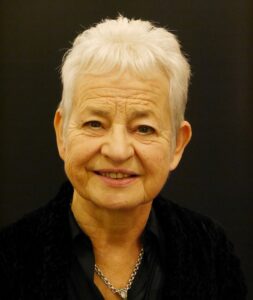 She gives children their own voice
One of Wilson’s greatest strengths is voice.
Her child narrators do not sound like adults speaking through children. They misunderstand things, exaggerate, joke, hide facts and reveal more than they intend.
This matters because children do not always have the language to describe emotional pain.
A child may not say, “I feel displaced by my parents’ separation.” She may complain about carrying a suitcase or hate the bedroom in the new house.
A child may not say, “I miss my mother who works abroad.” She may obsess over parcels, phone calls or the smell of a dress left behind.
Wilson understands that objects can carry emotion.
Sri Lankan writers could use this technique powerfully.
A pair of worn school shoes can reveal poverty.
A lunchbox can reveal shame.
A mobile phone can reveal distance between a migrant parent and child.
A school uniform can reveal class pressure.
A language spoken in the playground can reveal exclusion.
Children notice concrete things. Strong fiction allows the larger meaning to emerge through those details.
She writes about mothers without idealising them
In The Illustrated Mum, Wilson writes about two daughters living with a mother who is loving, imaginative and emotionally unstable.
The mother is neither a villain nor a saint. Her children love her, worry about her and are also hurt by her behaviour.
This is a brave achievement.
Jacqueline Wilson is best known for contemporary stories, but the Hetty Feather series shows how effectively she can write historical fiction.
Hetty is a foundling who refuses to accept the identity society gives her. Through her, history becomes personal.
Wilson does not begin with kings, laws or dates. She begins with hunger, separation, ambition and the need to belong.
Sri Lanka offers rich possibilities for this kind of writing.
A child growing up on a tea estate.
A girl travelling with a theatre company.
A boy living near the early railway.
A child displaced by communal violence.
A young messenger during a rebellion.
A child growing up around a harbour, temple, kovil or church.
Sri Lanka already has a strong visual storytelling tradition. There is great potential for closer collaboration between writers, illustrators and designers.
Children read Jacqueline Wilson because they recognise something of themselves in her characters.
Her stories tell children that they can be angry, jealous, frightened, poor, abandoned, confused or difficult and still deserve to be at the centre of a book.
That may be her greatest achievement.
She does not write about childhood as adults wish it to be.
She writes about childhood as it can actually feel.
A Sri Lankan Jacqueline Wilson-type story might focus on a child whose mother works abroad, a student crushed by examination pressure, a girl living between two languages, a boy ashamed of his father’s occupation, a child caring for an ill grandparent or siblings divided by migration.
These are not marginal subjects.
They are part of contemporary Sri Lankan childhood.
The writer who notices what adults miss
Jacqueline Wilson’s real achievement is not simply that she writes about difficult social issues.
Her achievement is that she listens to the child inside the problem.
She hears the boast hiding loneliness, the joke hiding fear, the anger hiding grief and the fantasy hiding abandonment.
Sri Lankan children’s literature should continue to celebrate folklore, magic, village life, animals and adventure. But it must also expand its emotional territory.
It must make room for children whose lives are fractured, modern, urban, displaced or difficult to explain.
Jacqueline Wilson shows that children will read painful stories when those stories also offer wit, dignity, companionship and hope.
Sri Lankan authors should read her not because she has the answers to Sri Lankan childhood, but because she asks the question every children’s writer must ask:
Lanka Books Online has a number of Jacqueline Wilson titles available.
Why not explore them—not only as enjoyable stories, but also as valuable lessons in how to write honestly, sensitively and memorably for children?