

Walk into a large bookshop and the experience can be both exciting and overwhelming.
Thousands of books wait on the shelves. Famous titles are displayed at the front. New releases compete for attention. Covers promise mystery, romance, adventure, wisdom and escape. Yet the reader still faces the same difficult question:
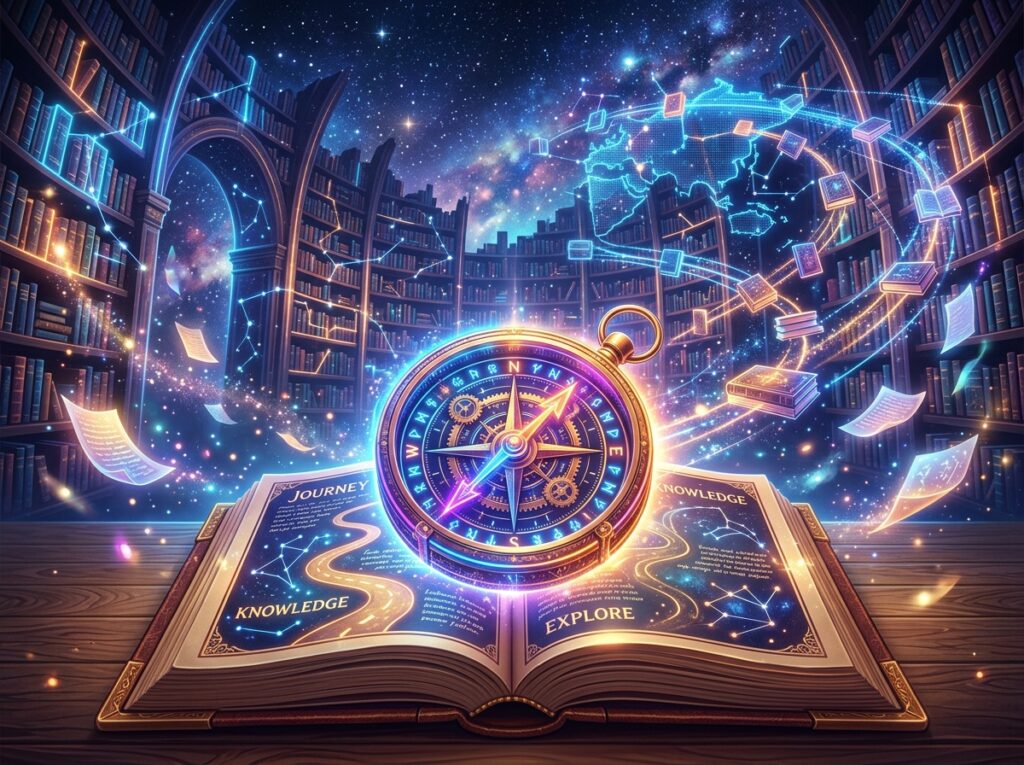
For millions of readers, Goodreads has become a kind of compass.
It does not always tell us exactly where to go. It is not always accurate. But it helps us find a direction.
From the bookshelf to the digital map
In the past, readers often discovered books through librarians, teachers, newspaper reviews, bookshop assistants or friends. These guides still matter. But Goodreads added something new: a vast public map created by readers themselves.
Search for a book and you immediately see ratings, reviews, quotations, related titles and lists made by other readers. A person who enjoys Harry Potter may soon discover Percy Jackson, Nevermoor, His Dark Materials or dozens of lesser-known fantasy novels.
One book becomes a doorway to another.
Goodreads therefore does more than catalogue books. It creates pathways between them.
Reading was once considered a mostly private act. A person bought a book, read it and perhaps discussed it with a few friends.
Goodreads changed that relationship.
The reader can now rate the book, write a review, save quotations, create shelves and recommend it to others. A reader in Colombo can influence someone in London. A teenager can challenge the opinion of a professional critic. An unknown novel can gain attention because ordinary readers continue to talk about it.
The reader is no longer only a customer.
The reader has become a critic, curator and guide.
A memory for our reading lives
Goodreads also works as a personal reading diary.
Many readers forget the titles they read several years ago. They may remember a character, a place or a feeling, but not the book itself. Goodreads shelves preserve that history.
“Read.”
“Currently reading.”
“Want to read.”
These simple categories create a map of a person’s intellectual and emotional journey.
Look back over several years and you may discover how your interests changed. Perhaps you moved from detective fiction to history, from fantasy to philosophy, or from self-help books to literary fiction.
A Goodreads account can quietly become an autobiography told through books.
Goodreads is especially valuable because it does not belong only to new releases.
An old novel, an out-of-print memoir or a forgotten children’s book may still have reviews and discussions. Readers can rediscover works that no longer appear in bookshop windows.
This gives books a longer life.
Publishers often move quickly from one season to another, but readers do not always follow that timetable. A book published thirty years ago can suddenly find a new audience because someone adds it to a list, quotes a passage or writes a passionate review.
Goodreads reminds us that a book does not become irrelevant simply because it is no longer new.
The power—and danger—of ratings
But every compass has limitations.
A high rating does not guarantee that a book will speak to you. A low rating does not mean the book has no value. Popular fiction often receives more attention because more people have read it. Difficult, experimental or culturally unfamiliar books may receive mixed reactions.
Ratings can also encourage readers to follow the crowd.
When thousands of people praise a book, we may begin reading with the expectation that we must admire it. When a book has poor ratings, we may reject it before giving it a chance.
There is also the danger of review bombing, personal attacks and ratings given by people who may not have read the book at all.
Goodreads can guide judgement, but it should never replace judgement.
The best way to use Goodreads is to treat it as a starting point.
Read the reviews, but notice who is writing them. Look for thoughtful disagreement rather than simply counting stars. Compare several opinions. Ask whether the reviewer shares your interests. Most importantly, remain willing to take a risk on a book that the algorithm does not recommend.
Some of the most important books in our lives are not the books everyone loves.
They are the books we discover unexpectedly.
Goodreads has helped create a new geography of books.
Readers are connected across countries. Genres form communities. Old books return. New writers find audiences. Private reading becomes public conversation.
It has not replaced the librarian, the critic, the teacher or the bookseller. Instead, it has added another voice to the discussion—the collective voice of readers.
That voice can be noisy, emotional and unreliable.
But it can also be generous, curious and surprisingly wise.
Goodreads is not a perfect guide. No reading platform could ever be.
But in a world overflowing with books, it offers something valuable: a way to begin.
Goodreads has become a compass for the modern reader—not because it always points to the best book, but because it helps us see how many possible journeys are waiting.